 Reviews



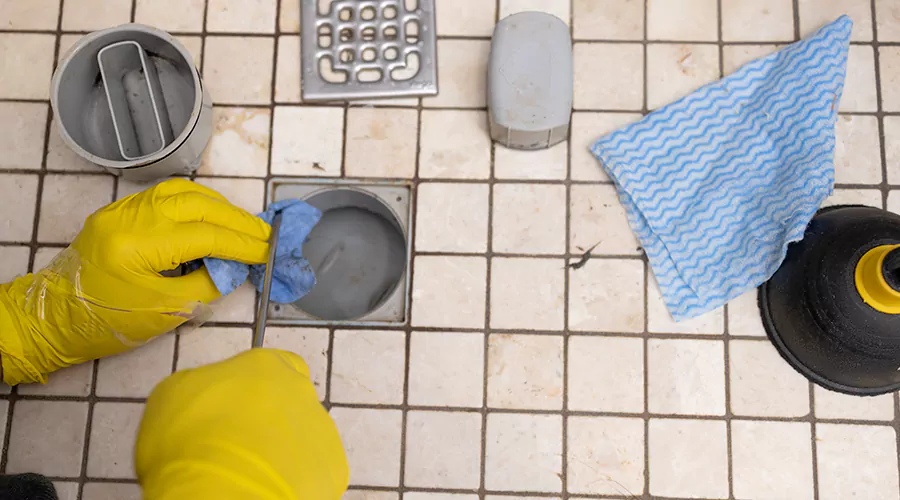
A shower drain is usually blocked because hair has combined with soap residue inside the drain, although mineral buildup or a deeper pipe obstruction can also restrict water. Professional drain cleaning costs about $147 to $352 in 2026. Shower repair can also address related fixture and drainage issues when a clogged shower affects normal bathroom use.
The supplied keyword blocked shower drain directly matches this problem.
Understanding what created the blockage helps you choose the correct repair and reduces the chance that the same condition will return.
Why Is Hair the Most Common Cause?
Hair becomes a problem because long strands catch on drain surfaces and existing debris. New hair then collects on the first strands. Soap residue helps bind the material into a denser mass.
- The buildup often sits just beneath the drain cover.
- That location makes it hard to see from above.
- Water can continue passing through small gaps for weeks.
- Eventually the remaining gaps become too narrow.
- You then notice a puddle around your feet.
This gradual progression explains why a shower can seem normal before becoming noticeably slow.
How Does Soap Contribute to a Blocked Drain?
Soap residue can coat the drain pipe and attach itself to trapped hair. Some personal-care products also contain oils that add sticky material to the pipe. Current 2026 shower-drain guidance identifies oil-based products as one contributor to drain buildup.
- Soap alone may wash through a clear pipe.
- The problem becomes stronger when another material is already present.
- Hair provides a structure.
- Residue attaches to that structure.
- The mass then catches more debris.
This cycle turns a small obstruction into a larger one.
The keyword shower clogged describes the final symptom rather than the cause.
Can Hard Water Block a Shower Drain?
Hard-water minerals can build up on plumbing surfaces over time. Scale reduces the available opening and gives other material a rougher surface to catch against. Hair clogs can therefore become more stubborn when mineral deposits are already present.
- Scale usually develops gradually.
- It can appear as pale residue near visible drain parts.
- The blockage may contain both organic material and mineral deposits.
- Removing only the hair can improve drainage without removing all of the restriction.
- Repeated problems can indicate that more than one type of buildup is present.
Can Something Else Fall Into the Drain?
Small objects can create a blockage when the drain cover has openings large enough to let them through. Pieces of product packaging or damaged shower accessories can lodge in the waste pipe.
- A solid object behaves differently from hair.
- It does not soften.
- It can become a catch point for new debris.
- Pushing it deeper can make retrieval harder.
If the blockage began immediately after something disappeared down the drain, mechanical retrieval deserves priority.
Do not pour repeated products into the pipe and expect a rigid object to dissolve.
How Does a Blocked Shower Drain Progress?
A shower drain rarely moves from fully clear to completely blocked without warning. The drain usually slows first. Standing water then lasts longer after each shower. A complete stoppage occurs when the remaining open area becomes too small to carry normal flow.
| Stage | Drain Behavior | Likely Condition | 2026 Cost Exposure |
|---|---|---|---|
| Early | Slight delay | Initial buildup | Often DIY |
| Partial | Water pools | Hair and residue | Low tool cost |
| Heavy | Water remains | Dense obstruction | $147 to $352 |
| System issue | Other fixtures slow | Deeper pipe blockage | Potentially higher |
The national average for professional drain cleaning is about $246 in 2026.
A deeper main sewer clog averages around $380.
The cost difference is another reason to notice early symptoms.
What Warning Signs Show the Blockage Is Getting Worse?
The amount of standing water is one useful measure. Changes elsewhere in the plumbing system provide another. A simple shower blockage should remain mostly isolated to that fixture.
- The shower puddle grows during every use.
- Water remains after the shower ends.
- Visible hair collects beneath the grate.
- The drain makes new gurgling sounds.
- A musty odor develops.
- The drain becomes slow again soon after cleaning.
- A sink in the same bathroom becomes slow.
- The toilet reacts when the shower drains.
- Dirty water returns through the shower opening.
- The drain stops completely.
Multiple slow drains can indicate a deeper plumbing blockage.
That condition should not be treated as a simple hair clog at the shower opening.
How Can You Tell Where the Blockage Is?
Remove the drain cover and look into the opening with a flashlight. A visible hair mass points toward a shallow clog. No visible material combined with several affected fixtures points toward a deeper problem.
- Wear gloves.
- Remove the grate.
- Pull out reachable debris.
- Test with a small amount of water.
- Watch how quickly it disappears.
If water flows normally afterward the obstruction was probably close to the surface.
If the drain stays slow you can use a snake.
If another fixture also reacts the blockage may sit beyond the shower branch.
This simple diagnostic sequence reduces unnecessary chemical use.
What Is the Safest DIY Fix for a Shallow Blockage?
Mechanical hair removal is usually the most direct first step. A plastic hair tool can pass through the drain opening and hook material without requiring pipe disassembly.
- Insert the tool slowly.
- Rotate it.
- Pull upward.
- Dispose of the debris.
- Repeat until the tool returns mostly clean.
- Run hot tap water.
The supplied keyword natural drain unclogger relates to homeowners looking for nonchemical approaches.
Physical removal is even simpler because it takes the blockage out of the system instead of trying to dissolve it.
Current guidance recommends visible debris removal before stronger methods.
When Is a Drain Snake Needed?
A snake is useful when the obstruction sits beyond the reach of a short plastic tool. The flexible cable travels deeper into the waste pipe and can capture hair or break apart softer buildup.
- Feed it into the drain.
- Turn the handle slowly.
- Notice where resistance begins.
- Work through the resistance without excessive force.
- Pull the cable back.
- Inspect what comes out.
- Run water afterward.
If the drain remains blocked after a reasonable snake attempt, continued force can be counterproductive.
The restriction may be farther downstream.
Could the Main Drain Be Responsible?
Yes. A shower can become the place where a deeper plumbing blockage first becomes visible because shower drains sit low in the bathroom. Wastewater can return through low fixtures when a shared drain or main line is restricted.
- Look for other symptoms.
- Check nearby sinks.
- Observe toilet behavior.
- Listen for widespread gurgling.
- Watch for dirty water returning through the shower.
A main sewer clog costs about $380 on average in 2026. Severe work involving inspection or hydro jetting can reach roughly $1,600.
A single shallow hair clog does not normally create those wider symptoms.
When Should You Call a Professional?
Professional help makes sense when the shower remains blocked after mechanical clearing or several fixtures show the same problem. Sewage backing into the shower also needs a different response from normal hair buildup.
Professional drain cleaning costs $147 to $352 in 2026.
Seek professional diagnosis when:
- More than one drain is blocked.
- Wastewater returns through the shower.
- A snake cannot improve flow.
- The clog repeatedly returns.
- Sewer odor accompanies widespread gurgling.
- The obstruction appears beyond normal household-tool reach.
Drain replacement is a separate project. Current 2026 data places bathtub or shower drain replacement between $500 and $1,020 with an average near $700.
How Can You Prevent Another Blockage?
A hair-catching screen reduces the amount of material entering the drain. Regular removal matters because hair sitting on top of the screen can still restrict water.
- Empty the catcher frequently.
- Pull visible hair from the grate.
- Clean soap residue around the opening.
- Respond to slower drainage early.
- Avoid allowing small objects near open drains.
- Use hot water after routine cleaning.
A shower drain that begins slowing should be treated as an early warning rather than normal aging.
Small maintenance steps can prevent the gradual progression toward standing water.
Conclusion
A blocked shower drain usually begins with hair that catches soap residue and gradually restricts water. Mineral buildup can make that obstruction more stubborn. Start by inspecting beneath the drain cover and remove reachable material. Use a snake when the blockage sits deeper. If several fixtures become slow or sewage returns through the shower, the issue may be farther downstream. Check your drain screen this week and remove accumulated hair.
Frequently Asked Questions
Why did my shower drain suddenly stop?
A developing clog can shift and close the last open part of the pipe. A foreign object can also create a sudden blockage.
Can soap alone block a drain?
Soap residue contributes to buildup. Hair often provides the structure that turns residue into a dense shower clog.
Does hard water make shower clogs worse?
Mineral scale can narrow the pipe and give hair more surface to catch against.
Why is only my shower blocked?
The obstruction is likely close to that fixture when every other drain works normally.
Why does the shower back up when I flush the toilet?
That pattern can indicate a shared drainage problem rather than a clog limited to the shower.